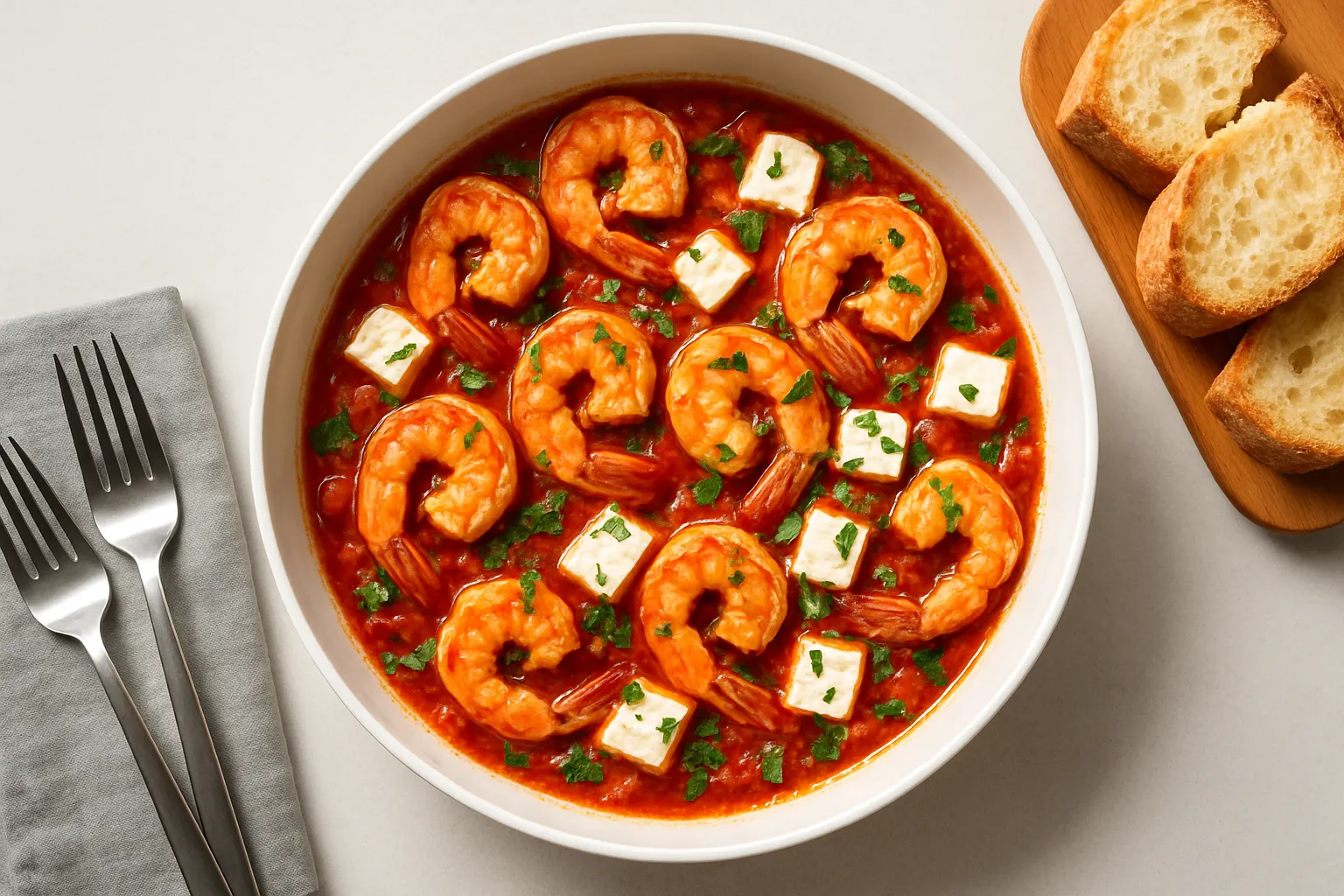
Shrimp saganaki with tomatoes and feta in a white pan with crusty bread.

Best Garides Saganaki (Shrimp Saganaki with Tomatoes & Feta)

A classic Greek tavern favorite, Garides Saganaki features tender shrimp simmered in a rich tomato–garlic–ouzo sauce, finished with tangy feta and fresh herbs. It’s fast enough for a weeknight yet special enough to serve to guests with plenty of crusty bread for dipping.

Serves 4
Servings
30–40 minutes
Total Time
10–15 minutes
Prep Time
20–25 minutes
Cook Time
30–40 minutes
Total Time

INGREDIENTS

20–25 shrimp (about 1–1¼ lb / 450–600 g) large shrimp, peeled and deveined, tails on or off
pat very dry with paper towels
3–4 tbsp olive oil
divided; use extra-virgin if possible
2–3 cloves garlic cloves, finely chopped
1 medium onion, finely chopped
yellow or white onion
4 ripe tomatoes, finely chopped
or about 1½ cups (350 ml) tomato sauce or passata
¼ cup (60 ml) ouzo
or dry white wine as a substitute
200–250 g (7–9 oz) feta cheese, crumbled
use good-quality, firm Greek feta in brine
to taste salt
start with ½ tsp for the sauce and adjust
to taste freshly ground black pepper
Pinch to ¼ tsp chili flakes or finely chopped hot pepper (optional)
adjust to preferred heat level
2 tbsp fresh parsley or dill, chopped
plus extra for garnish (optional)

METHOD

1

Prep the shrimp. Pat the shrimp very dry with paper towels so they sear instead of steam. Season lightly on both sides with a pinch of salt and freshly ground black pepper.

⚡ Pro Tip: Drying the shrimp helps them brown quickly and prevents the sauce from becoming watery.

2

Sear the shrimp. Heat 1 tbsp olive oil in a wide skillet or sauté pan over medium-high heat. Add the shrimp in a single layer and cook for 1–2 minutes per side, just until they start to turn pink and curl lightly but are not fully cooked through.

⚡ Pro Tip: Cook in two batches if needed so you don’t overcrowd the pan.

3

Add aromatics and ouzo. Add about half of the chopped garlic to the shrimp and sauté for 30–60 seconds until fragrant (do not let it brown). Pour in the ouzo and let it bubble vigorously for about 1 minute to cook off most of the alcohol, scraping up any browned bits from the bottom of the pan.

⚡ Pro Tip: If you prefer not to use alcohol, you can skip the ouzo and add 2–3 tbsp extra tomato and a squeeze of lemon at the end for brightness.

4

Remove shrimp and juices. Transfer the shrimp and all the pan juices to a bowl and set aside. They will finish cooking later in the tomato sauce.

⚡ Pro Tip: Do not rinse or wipe the pan; the flavorful residue will enrich the sauce.

5

Start the tomato base. In the same pan, reduce the heat to medium-low and add the remaining 2–3 tbsp olive oil. Add the chopped onion and a pinch of salt. Cook, stirring occasionally, for 5–7 minutes until the onion is soft and translucent but not browned.

⚡ Pro Tip: Cooking the onion gently builds sweetness and depth in the sauce.

6

Add garlic and chili. Stir in the remaining chopped garlic and the chili flakes or hot pepper (if using). Sauté for about 1 minute until fragrant.

⚡ Pro Tip: Keep the heat moderate so the garlic does not burn, which would make the sauce bitter.

7

Add tomatoes and simmer. Add the chopped fresh tomatoes (or tomato sauce/passata) along with a small pinch of salt and a few grinds of black pepper. Bring to a gentle simmer, then reduce the heat to low and cook, uncovered, for 15–20 minutes, stirring occasionally, until the sauce is thick, rich, and “saucy” rather than watery.

⚡ Pro Tip: If using very fresh, juicy tomatoes, you may need closer to 25–30 minutes to reduce properly. The sauce should lightly coat the back of a spoon.

8

Taste and adjust seasoning. Taste the tomato sauce and adjust with more salt and pepper if needed. If the tomatoes are very acidic, you can balance with a pinch of sugar, though traditional recipes often rely only on good, ripe tomatoes.

⚡ Pro Tip: Season the sauce fully at this stage; once the shrimp and feta are added, you’ll have fewer chances to adjust salt levels without over-salting.

9

Return shrimp to the pan. Pour the reserved shrimp and all their juices back into the skillet, nestling them into the tomato sauce in an even layer. Simmer gently for 2–3 minutes, just until the shrimp are cooked through and opaque in the center.

⚡ Pro Tip: Avoid boiling vigorously at this stage, as shrimp can quickly turn rubbery when overcooked.

10

Add feta and herbs. Sprinkle the crumbled feta evenly over the shrimp and tomato mixture, then scatter the chopped parsley or dill on top. Cover the pan (or loosely tent with a lid or foil) and warm over low heat for 1–2 minutes, just until the feta softens and starts to lose its sharp edges but doesn’t completely melt into the sauce.

⚡ Pro Tip: The feta should remain in soft, creamy chunks—this gives the dish its characteristic look and texture.

11

Serve. Remove from heat and serve immediately, straight from the pan, with extra herbs on top if desired. Pair with plenty of crusty bread for dipping, or serve over rice, orzo, or with a side of simple green salad.

⚡ Pro Tip: This dish is best eaten as soon as it’s made, while the shrimp are tender and the feta is warm and creamy.

💡 EXPERT TIPS

  • Use high-quality shrimp: Large, fresh shrimp (or well-thawed frozen shrimp) make a big difference in texture and sweetness. Avoid cooking from frozen to prevent excess liquid in the pan.
  • Don’t overcook the shrimp: Shrimp go from perfect to rubbery quickly. Sear briefly at the start, then finish for just a few minutes in the sauce at the end.
  • Reduce the tomato sauce properly: A slightly thick, concentrated sauce clings to the shrimp and carries the ouzo and feta flavors better than a thin, watery sauce.
  • Choose real Greek feta: A firm, tangy feta made from sheep’s milk (or sheep and goat) will hold its shape and deliver the authentic salty, creamy punch this dish is known for.
  • Taste for salt after adding feta: Feta is salty, so avoid over-salting earlier in the process. Always taste the finished sauce before adding any extra salt.
  • Serve in a hot dish: Garides saganaki cools quickly. Pre-warm your serving dish or bring the skillet directly to the table to keep everything hot.
  • Pair thoughtfully: Serve with crusty bread, pita, or toasted baguette, plus a crisp salad and a glass of dry white wine or ouzo for a true taverna-style experience.

🎨 VARIATIONS

  • Wine instead of ouzo: If you don’t have ouzo, use ¼ cup dry white wine. You’ll lose the distinct anise note, but the acidity and depth still complement the shrimp and tomatoes beautifully.
  • No-alcohol version: Omit the ouzo and deglaze the pan with a splash of shrimp or vegetable stock. Finish with a squeeze of lemon for brightness.
  • Spicier saganaki: Increase the chili flakes to ½ tsp or add finely chopped fresh chili to turn this into a more fiery meze-style dish.
  • Herb variations: Replace parsley with dill (common in Greece) for a more aromatic, grassy note, or use a mix of both. A small amount of fresh oregano can also be added to the tomato sauce.
  • With vegetables: Add a handful of chopped bell pepper or a few handfuls of baby spinach to the tomato sauce during the last 5 minutes of simmering for more color and nutrients.
  • Baked saganaki style: After simmering the sauce and adding the shrimp, transfer everything to a small baking dish, top generously with feta, and broil for 3–5 minutes until the edges bubble and the feta is lightly golden in spots.
  • Low-carb serving idea: Instead of bread or rice, serve the shrimp and sauce over sautéed zucchini ribbons, cauliflower rice, or a simple bed of steamed greens.

📊 NUTRITION

Calories ~320 kcal
Protein ~28–30 g
Total Fat ~20 g
Saturated Fat ~9 g
Carbohydrates ~7–9 g
Fiber ~2 g
Total Sugars ~4–5 g
Cholesterol ~225 mg
Sodium ~850–950 mg (varies with feta and added salt)
Calcium ~250–300 mg
Vitamin B12 High (from shrimp and feta)